Choosing the wrong material for a turned part is a quiet, expensive mistake: the part machines fine and passes inspection, then fails in service — corroded, stripped, or worn out — because the material was picked by habit, not by what the part must survive. Brass, copper and stainless steel are all common choices for custom turned parts, but they are not interchangeable, and the right choice is decided by the environment, the load and the mating material, not by the catalogue. This guide compares the three materials on corrosion, strength, wear, machinability, threading and cost, and shows how to state the material in your RFQ — with a reason — so you get a faster quote and a part that works the first time.
How the three materials differ in service
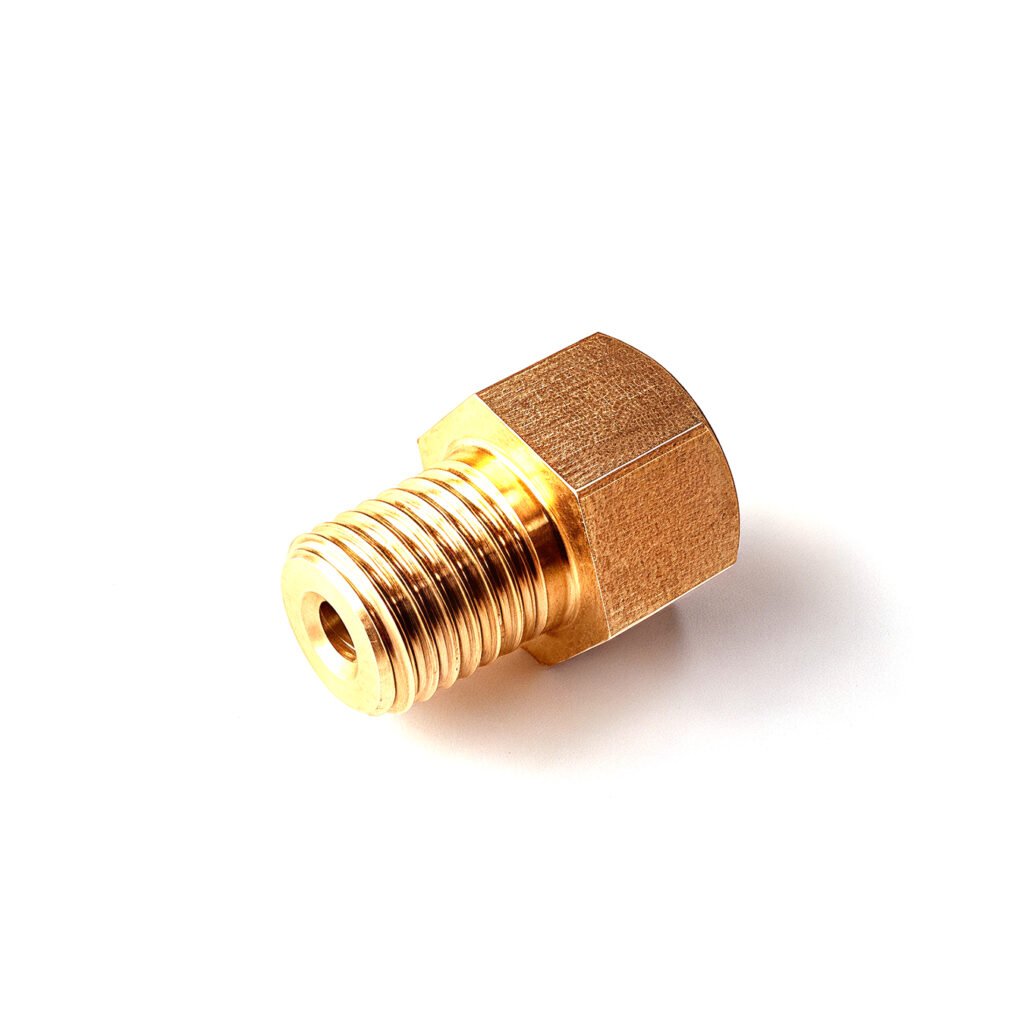
Brass is the default for many turned fittings, nuts, bushings and connectors because it machines cleanly, holds a thread well, and resists corrosion in ordinary indoor and sheltered outdoor use. Copper is the choice when electrical or thermal conduction matters most; it is softer than brass, so a copper part needs more care in handling and in thread design, and it is not the first choice where a thread will be tightened and loosened repeatedly. Stainless steel is the choice when corrosion resistance, strength, or a harsh environment is the driving requirement; it is harder to machine than brass, which affects cycle time and tooling, and that difference shows up in the quote.
The question to ask first is not “which material is best” but “what must this part survive.” A fitting that carries water, a terminal that carries current, and a fastener that sits outdoors in a salty atmosphere have different failure modes, and the material should be chosen against the failure mode, not against a catalogue habit.
Corrosion: what the part will actually face
Corrosion is not one condition. A part can face humidity, condensation, cleaning chemicals, salt spray, or contact with a dissimilar metal, and each of those points toward a different material. Brass performs well in many of these, but a buyer should name the environment in the RFQ — indoor, sheltered outdoor, marine, chemical washdown — rather than writing “corrosion resistant” and leaving the supplier to guess. Stainless steel earns its place where the environment is aggressive or where the part cannot be inspected and replaced easily. Copper can tarnish and discolour in service; that is cosmetic in some applications and a problem in others, so the buyer should say whether appearance matters.
If the part will sit against another metal, say so. Galvanic contact between dissimilar metals is a real design consideration, and the material choice for the turned part should be made together with the mating material, not in isolation.
Strength and wear: where the load goes
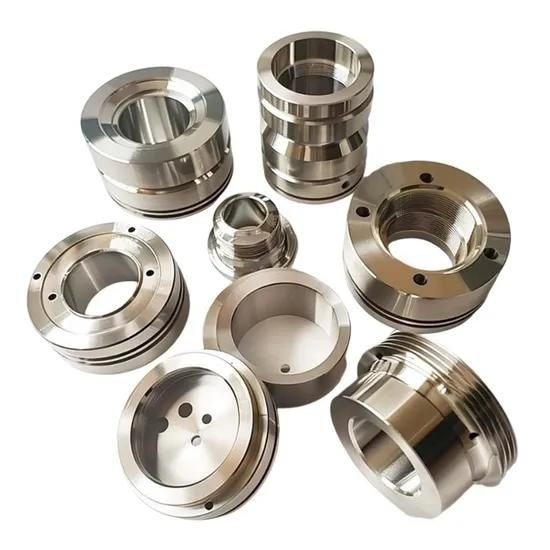
A turned part rarely fails in the middle of a plain diameter. It fails at a thread, a thin wall, a shoulder, or a press-fit interface. Brass is strong enough for most fittings and fasteners, and it wears well in sliding contact. Copper is softer, so a copper thread or a thin copper wall needs a more generous design, and a buyer should not copy a brass dimension straight onto a copper part. Stainless steel carries higher loads and resists wear better, but it also transmits more cutting force into the tool, which is why a stainless part is usually quoted differently from the same drawing in brass.
Describe the load in the RFQ in plain terms: is the part tightened once and left alone, cycled repeatedly, loaded in tension, or subject to vibration? That description lets the engineer judge whether the material is adequate, and it is more useful than a strength figure copied from a datasheet without context.
Machinability and what it does to the quote
Machinability is not a marketing word; it is the reason the same drawing can be quoted at very different prices in different materials. Brass cuts cleanly, produces a good surface, and allows efficient turning and threading. Copper is gummy by comparison and needs careful tooling and cutting conditions to avoid tearing and poor surface quality. Stainless steel work-hardens and wears tools faster, so the turning process is slower and the tooling cost is higher.
A buyer does not need to specify cutting conditions. The buyer does need to understand that a material change is not a free substitution: changing from brass to stainless steel on the same drawing changes the process, the inspection, and the price. If the budget is fixed, that is a reason to confirm the material early, before the drawing is frozen, rather than changing it after the quote.
Threading, sealing and mating surfaces
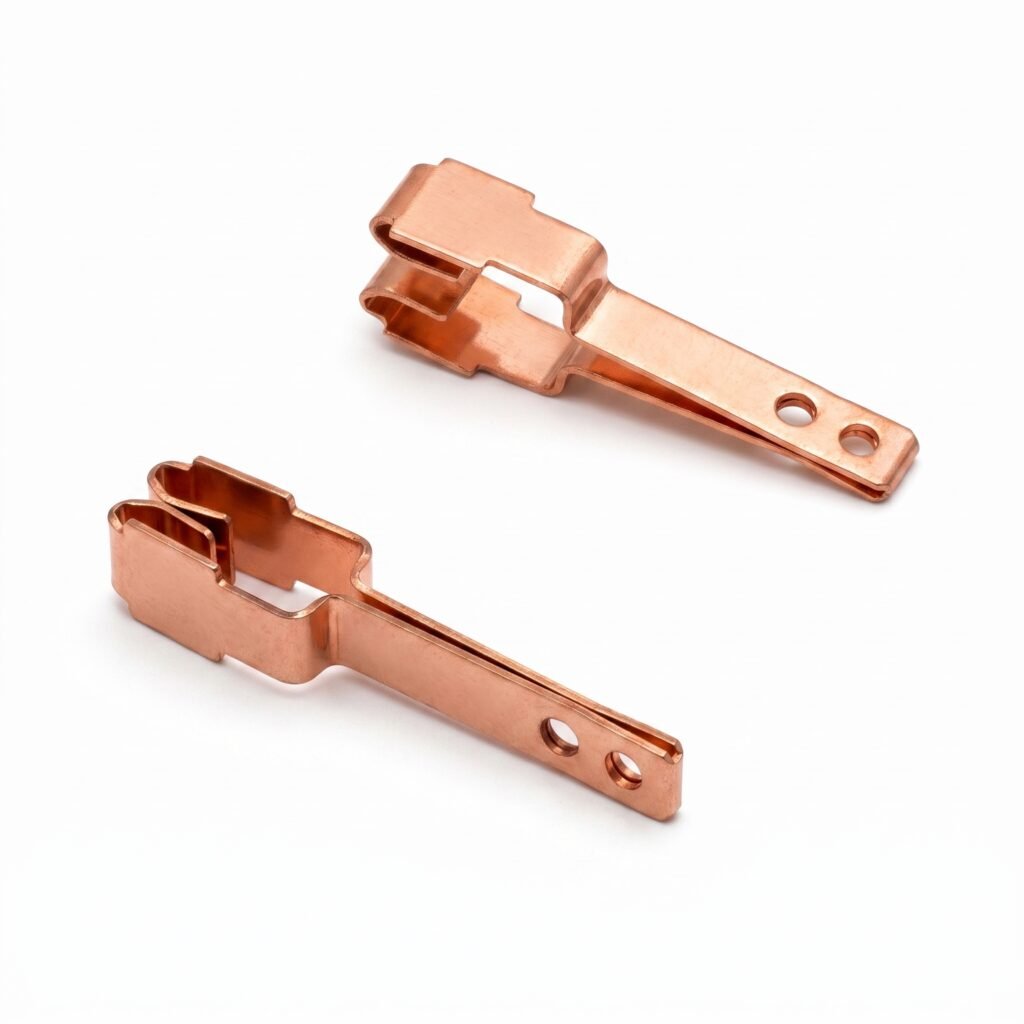
Threads are where material choice becomes visible. Brass threads cut cleanly and hold well, which is why brass is so common for threaded fittings and inserts. Copper threads are softer and more easily damaged in assembly, so a copper threaded part needs a thread design and an assembly method that protect the thread. Stainless threads can gall when tightened against stainless, so the mating material and any lubrication or coating should be stated in the RFQ if the joint will be assembled and disassembled.
Sealing faces, bores and press-fit surfaces also depend on material. A bore that must stay round under load behaves differently in brass than in copper, and a press fit that works in stainless may not work in brass at the same interference. State the function of each surface — sealing, sliding, press fit, thread — so the engineer can judge whether the material supports it.
Cost drivers: material, process and scrap
Material cost is only part of the quote. The rest is process time, tooling, inspection, and the risk of scrap. Brass is often the lowest total cost for a turned part because it machines efficiently and inspects cleanly. Copper can be more expensive in material and in process time, even when the part is simple. Stainless steel is usually the highest total cost of the three for the same drawing, because of slower machining and higher tooling wear, but it can be the cheapest option over the life of the product if it avoids a failure or a replacement.
A buyer who compares quotes across materials should compare the total cost of the part in service, not the material price alone. Ask the supplier to quote the same drawing in the material you are considering, rather than assuming a percentage difference, and keep the comparison on the same drawing, the same quantities, and the same inspection requirements.
How to state the material in your RFQ
Do not write only a material name. Write the material, the environment, the load, and the surfaces that matter. A good material line in an RFQ names the alloy family, the service environment, any mating material, and whether appearance, conduction, or corrosion resistance is the deciding factor. If you are unsure between two materials, say so in the RFQ and ask for a recommendation — an engineer who sees the whole application can advise, but only if the application is described.
If a drawing already specifies a material, check whether the specification is a requirement or a habit. A drawing that was copied from an earlier part may carry a material that was right for that part and wrong for this one. A short note in the RFQ — “material is open to recommendation for this environment” — can save a redesign later.
Common pitfalls and how to avoid them
The most common pitfall is copying a material from a similar part without checking the environment. The second is choosing stainless steel for corrosion resistance when the real problem is a mating material or a seal, not the turned part itself. The third is choosing copper for a threaded part that will be assembled repeatedly, then finding the thread damaged in service. The fourth is changing material after the quote without re-quoting, which leaves the price, the process and the inspection out of step with the drawing. The fifth is specifying a material by a trade name or a grade that is not available in the required form, which delays the quote while the grade is clarified.
Buyer FAQ
Which material is best for a custom turned part? There is no best material in general. The question to ask first is not “which material is best” but “what must this part survive.” A fitting that carries water, a terminal that carries current, and a fastener that sits outdoors in a salty atmosphere have different failure modes, and the material should be chosen against the failure mode, not against a catalogue habit.
When should I choose stainless steel over brass? Stainless steel is the choice when corrosion resistance, strength, or a harsh environment is the driving requirement — and where the part cannot be inspected and replaced easily. Brass performs well in ordinary indoor and sheltered outdoor use, but stainless earns its place where the environment is aggressive.
Can I use copper for a threaded part that is assembled repeatedly? Copper is the choice when electrical or thermal conduction matters most, but it is softer than brass, so a copper part needs more care in handling and in thread design. It is not the first choice where a thread will be tightened and loosened repeatedly.
Why does the same drawing cost different amounts in brass, copper and stainless steel? Because machinability is not a marketing word: brass cuts cleanly, copper is gummy by comparison and needs careful tooling to avoid tearing, and stainless steel work-hardens and wears tools faster, so turning is slower and tooling cost is higher. Changing material on the same drawing changes the process, the inspection, and the price — it is not a free substitution.
What should I write in the RFQ besides the material name? Write the material, the environment, the load, and the surfaces that matter. Name the alloy family, the service environment, any mating material, and whether appearance, conduction, or corrosion resistance is the deciding factor — and say whether the material is a requirement or open to recommendation.
The four-question material test
Before naming a material in the RFQ, answer these four questions from the sections above. If any answer is missing, the material is a guess, not a decision.
- What must it survive? Name the environment — indoor, sheltered outdoor, marine, chemical washdown — and the failure mode: corrosion, wear, thread damage, or load.
- Where does it fail? A turned part rarely fails in the middle of a plain diameter. It fails at a thread, a thin wall, a shoulder, or a press-fit interface — describe the load on those features in plain terms.
- What does it mate with? If the part sits against another metal, say so: galvanic contact is a real design consideration, and the material should be chosen together with the mating material.
- Is it a requirement or a recommendation? If the drawing already specifies a material, check whether it is a requirement or a habit carried over from an earlier part. If you are unsure between two materials, say so and ask for a recommendation — with the application described.
Buyer checklist
- Name the service environment: indoor, sheltered outdoor, marine, chemical, or washdown.
- Name the failure mode you are designing against: corrosion, wear, thread damage, or load.
- Name the mating material and whether the joint is assembled once or repeatedly.
- State whether electrical or thermal conduction matters, and how much.
- State whether appearance and tarnishing matter in service.
- Describe the load on threads, thin walls, shoulders and press-fit surfaces.
- Say whether the material is a requirement or open to recommendation.
- Ask for the quote on the same drawing, quantities and inspection for any material comparison.
Request an engineering quote for your turned part and state the material, environment and mating parts in the RFQ at https://precimora.com/request-a-quote/ — the quote is promised in 24–48h.