A buyer who sends a drawing to the wrong process gets one of two bad outcomes: a quote that is far higher than it should be, or a part that cannot be made the way it was drawn. Turning and milling are both CNC processes, but they shape metal in opposite ways — turning rotates the workpiece while a fixed tool shapes it, milling holds the workpiece still while a rotating cutter removes material — and the geometry of a part usually decides which one fits before any price is discussed. This guide teaches the skill that prevents both bad outcomes: how to read from the drawing whether a part is a turning job, a milling job, or a combination, and what to state in the RFQ so the part is quoted on the right process.
How turning shapes a part, and how milling shapes one
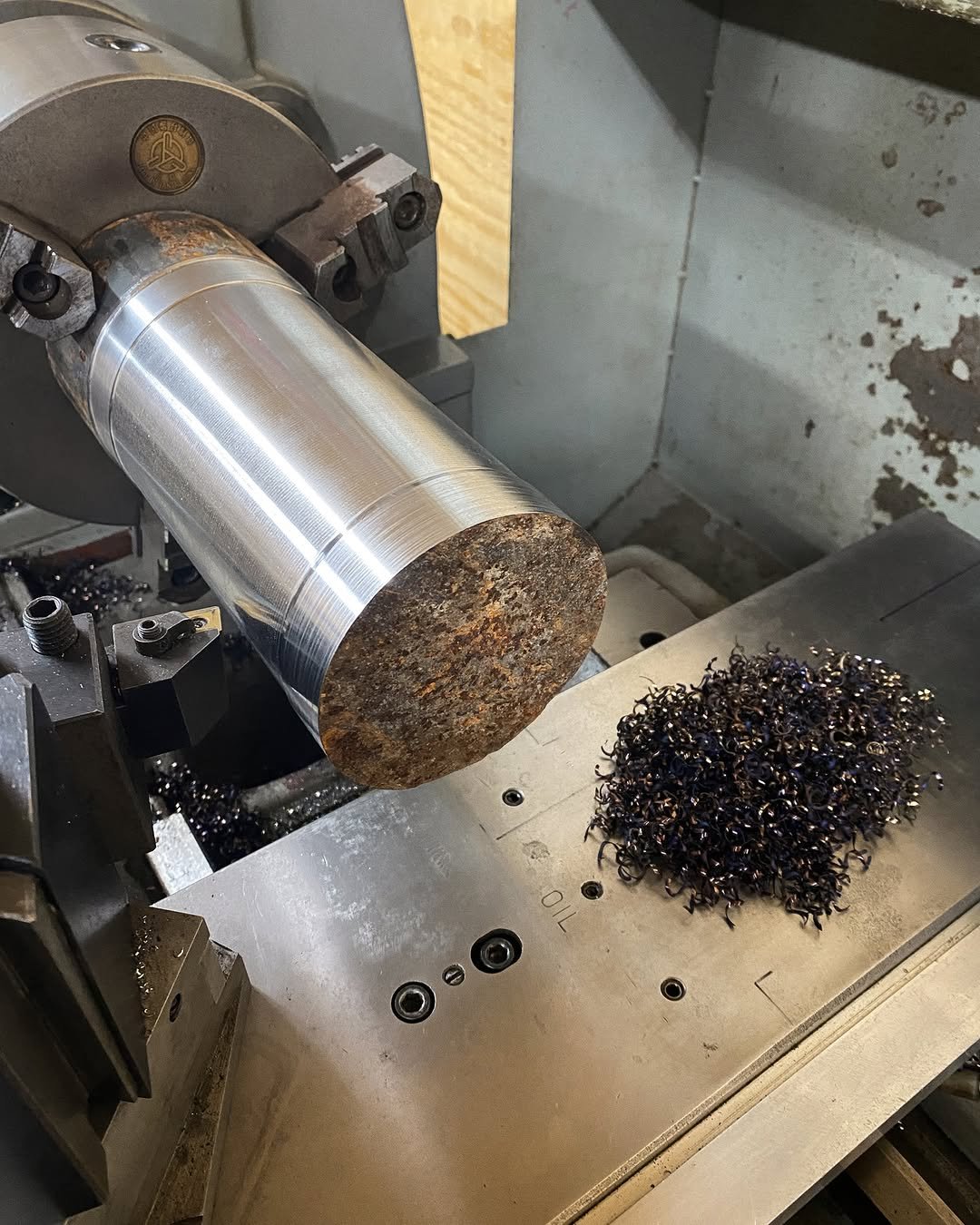
Turning rotates the workpiece while a fixed cutting tool shapes it. That is why turning is the natural process for round parts: shafts, bushings, nuts, sleeves, pins, and fittings whose main features are diameters, bores, threads, and shoulders arranged around one axis. Milling holds the workpiece still — or moves it on a table — while a rotating cutter removes material. That is why milling is the natural process for flat faces, pockets, slots, holes that are not on the main axis, and shapes that are not round. A part that is mostly round with a few flat features is still usually a turning part with a secondary operation. A part that is mostly flat or block-shaped with features on several faces is usually a milling part. The first question is therefore not “which process is cheaper” but “what shape is this part, really” — round around one axis, or shaped on several faces.
Reading the drawing: the signs that point to turning
Several signs on a drawing point to turning. The part is shown as a revolved profile — a cross-section that, rotated around a centreline, makes the whole part. The dimensions are mostly diameters, lengths along one axis, bores, and threads. The centreline is the dominant reference, and most features are symmetric around it. Fittings, bushings, standoffs, and threaded inserts almost always carry these signs. If the drawing can be described completely as a profile plus a few notes, the part is a turning part, and it should be quoted as one. Sending it as a milling job would mean making a round part by removing material from a block, which takes longer and wastes more material for no benefit.
Reading the drawing: the signs that point to milling
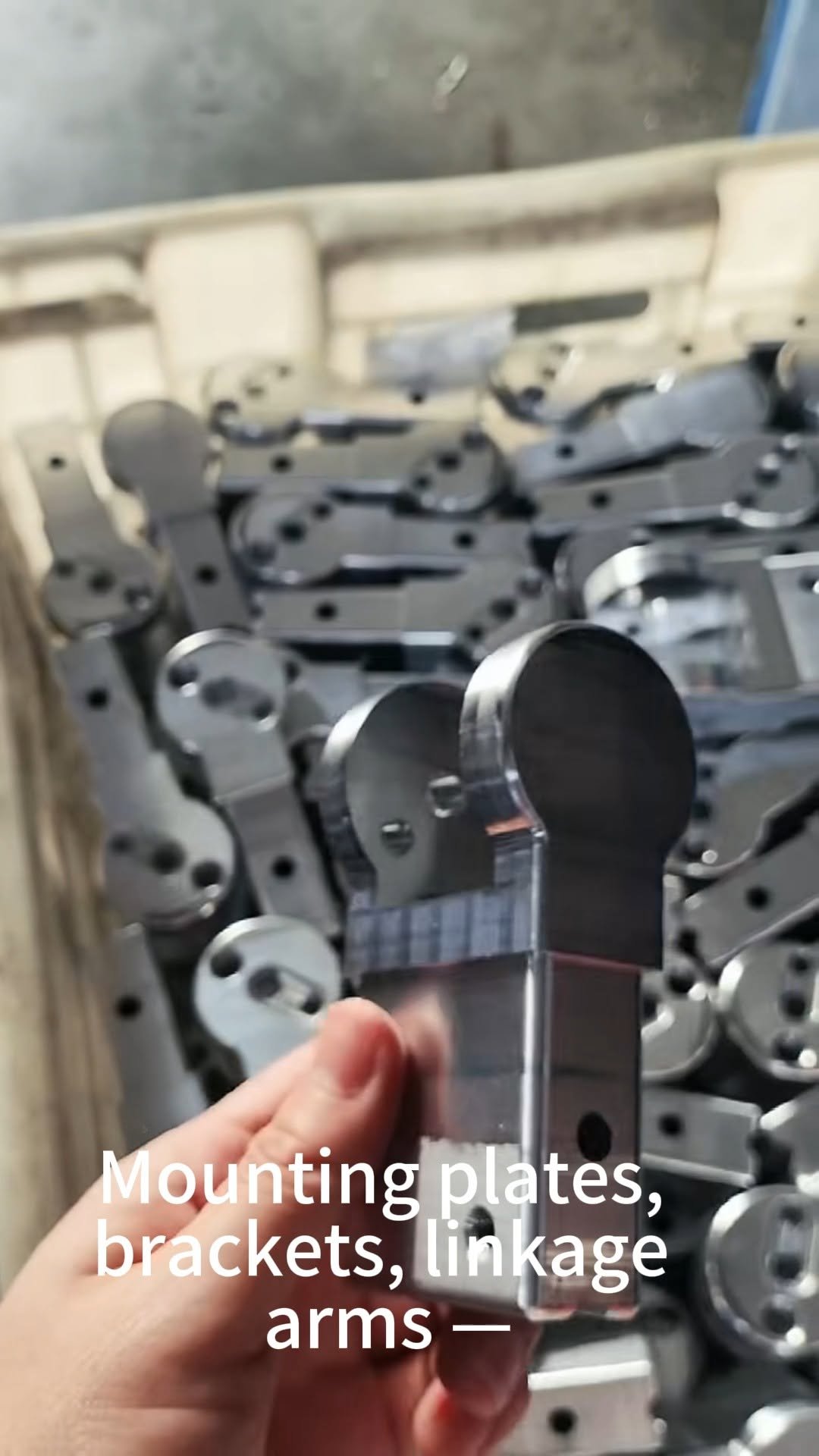
The signs that point to milling are the opposite. The part has flat faces that must be parallel or perpendicular to each other, pockets or cavities, slots, steps, or holes drilled at angles to the main faces. Dimensions are given as distances between faces or from a datum face, not as diameters around a centreline. The part may be a bracket, a housing, a plate, or a block with features on more than one side. If the drawing needs three views to be understood and the views show different shapes, the part is probably a milling part. A buyer who recognises this before sending the RFQ can ask for a milling quote directly, instead of receiving a turning quote that has to be reworked.

Parts that need both: turning first, then milling
Many real parts need both processes, and the order matters. A common pattern is a turned blank — a round part made on a lathe — that then goes to a mill for flats, cross-holes, slots, or a hex. The turning establishes the diameters, the bore, and the thread; the milling adds the features that cannot be made by rotating the part. In the RFQ, these features should be listed separately: which features are turned, which are milled, and which surfaces are the reference for the milled features. If the drawing does not say which process makes which feature, the supplier has to guess, and two suppliers may guess differently — which is one reason two quotes for the same drawing can look so different. A buyer who separates the features in the RFQ gets quotes that can be compared feature by feature.
What the process choice does to the quote
The process is one of the main cost drivers in a quote, because it decides the machine, the setup, and the time. A turning part quoted on a lathe is usually efficient because the setup matches the geometry. The same part quoted on a mill would need more setups and more material removal, and the quote would show it. The reverse is also true: a milled part quoted as a turning job would need awkward workholding and extra operations. This is why a buyer should not compare a turning quote and a milling quote for the same part as if they were the same thing. The comparison only makes sense once both suppliers are quoting the same process for the same features. If a quote seems surprisingly high or surprisingly low, the first thing to check is whether the supplier has quoted the process the drawing actually needs.
What to state in the RFQ so the part is quoted on the right process
A good RFQ makes the process decision easy. State the material, the quantities, and the drawing, as always — and then add three things. First, say whether the part is a turning part, a milling part, or a combination, if you know; if you do not know, say so and ask for a recommendation. Second, list the features that are not obvious from the main view: cross-holes, flats, slots, milled faces, and any feature that is not symmetric around the centreline. Third, name the reference surfaces: which face or diameter the other features are measured from, because that decides how the part is held for the second operation. A short note — “turned blank, milled flats on two sides, datum is the bore” — can save a round of questions and a requote. The supplier can then quote the process the part needs, not the process the drawing seemed to suggest at first glance.
Common pitfalls and how to avoid them
The most common pitfall is sending a part that needs both processes as if it needed only one, so the quote covers half the work and the rest appears later as a surprise. The second is describing a milled part in turning language — diameters where the drawing really needs face-to-face distances — which confuses the quote. The third is forgetting the features that are not on the main view: a cross-hole or a flat that only appears in a side view is easy to miss and expensive to add later. The fourth is comparing quotes from suppliers who quoted different processes, which is not a comparison at all. The fifth is assuming that a part with a round outline is a turning part, when its important features are flat faces and pockets. The sixth is not naming the datum for the second operation, so the milled features are made relative to the wrong reference. Each of these is avoided by reading the drawing feature by feature before the RFQ is sent.
Buyer FAQ
How do I know if my part is a turning part?
Look for a revolved profile — a cross-section that, rotated around a centreline, makes the whole part. The dimensions are mostly diameters, lengths along one axis, bores, and threads; the centreline is the dominant reference, and most features are symmetric around it. Fittings, bushings, standoffs, and threaded inserts almost always carry these signs. If the drawing can be described completely as a profile plus a few notes, the part is a turning part.
How do I know if my part is a milling part?
The signs are the opposite: flat faces that must be parallel or perpendicular to each other, pockets or cavities, slots, steps, or holes drilled at angles to the main faces. Dimensions are given as distances between faces or from a datum face, not as diameters around a centreline. The part may be a bracket, a housing, a plate, or a block with features on more than one side. If the drawing needs three views to be understood and the views show different shapes, the part is probably a milling part.
What if my part needs both turning and milling?
Many real parts do, and the order matters: a turned blank — a round part made on a lathe — that then goes to a mill for flats, cross-holes, slots, or a hex. The turning establishes the diameters, the bore, and the thread; the milling adds the features that cannot be made by rotating the part. In the RFQ, list the turned features and the milled features separately, and name the reference surfaces for the milled features.
Why can’t I compare a turning quote with a milling quote?
Because the process decides the machine, the setup, and the time. A turning part quoted on a lathe is usually efficient because the setup matches the geometry; the same part quoted on a mill would need more setups and more material removal. The comparison only makes sense once both suppliers are quoting the same process for the same features. If a quote seems surprisingly high or low, check first whether the supplier quoted the process the drawing actually needs.
My part looks round — is it automatically a turning part?
No. A part with a round outline can still be a milling part when its important features are flat faces and pockets. The first question is not “which process is cheaper” but “what shape is this part, really” — round around one axis, or shaped on several faces.
Read the drawing in 60 seconds
Work through these five steps in order before writing the RFQ. Each step comes from the sections above.
- Describe the shape honestly. Round around one axis, flat and multi-faced, or a combination? Do not let a round outline decide the answer — check what the important features are.
- List the main features in their own language. Diameters, bores and threads point to turning; faces, pockets and slots point to milling. If the drawing’s main features are listed as diameters and bores, it is a turning part; if they are faces, pockets and slots, it is a milling part.
- Name every feature that is not symmetric around the centreline. Cross-hole, flat, slot — any feature that only appears in a side view is easy to miss and expensive to add later. Name it in the RFQ.
- Name the datum for the second operation. For a combined part, state which face or diameter the milled features are measured from — a short note such as “turned blank, milled flats on two sides, datum is the bore” can save a round of questions and a requote.
- State the process — or ask. Say whether the part is a turning part, a milling part, or a combination, if you know; if you do not know, say so and ask for a recommendation. Then compare quotes only for the same process on the same features.
Buyer checklist
- The part’s shape is described honestly: round around one axis, flat and multi-faced, or a combination.
- The drawing’s main features are listed as diameters and bores (turning) or as faces, pockets, and slots (milling).
- Any feature not symmetric around the centreline — cross-hole, flat, slot — is named in the RFQ.
- For combined parts, turned features and milled features are listed separately.
- The reference surface or datum for the second operation is stated.
- The RFQ says whether the process is specified by the buyer or open to the supplier’s recommendation.
- Quotes being compared are for the same process on the same features, not for different processes.
- A quote that looks surprisingly high or low is checked first against the process quoted, before it is checked against price.