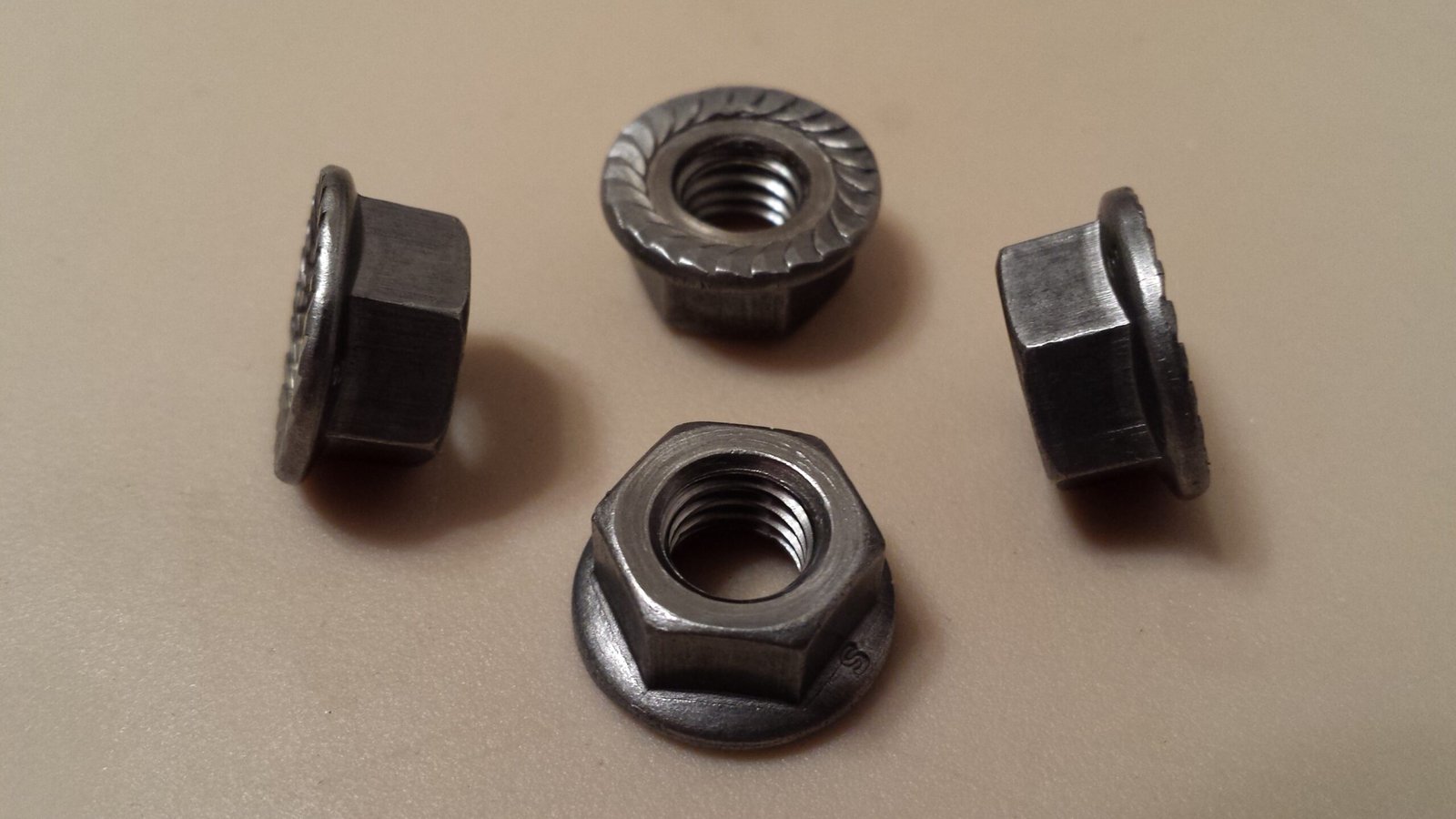
A flanged nut is a nut with a built-in washer: a wide flange at one end that spreads the clamping load over a larger area. That one feature changes how the nut is specified, because the flange is not decoration — it is the bearing surface, and its size, its flatness, and its relationship to the thread decide whether the joint holds or whether the nut damages the surface it clamps. A buyer who specifies a flanged nut the same way as a plain nut will get a part that looks right and fails in the joint. A buyer who specifies the flange, the thread, and the hex together will get a nut that does the job it was chosen for.
What the flange does, and when it earns its place
The flange spreads the load. A plain nut bears on a small ring under the hex, and on a soft material, a thin sheet, or a painted surface that small bearing area can dent, deform, or strip the coating. A flange increases the bearing area, so the same tightening load produces less pressure on the clamped surface. That is the whole reason to choose a flanged nut: the joint needs the load spread, the surface needs protection, or the assembly needs the nut to stay put without a separate washer. If none of those is true — if the surface is hard, the load is light, and a washer is already in the assembly — a flanged nut adds material and machining for no benefit. The first question in the RFQ should therefore be the reason: what surface is the flange bearing on, and what would happen to that surface under a plain nut?
Flange diameter and thickness: the two numbers that matter most
The flange diameter sets how far the load is spread, and the flange thickness sets how stiff the flange is under that load. A flange that is too small does not spread the load enough to help; a flange that is too thin can flex or dish under tightening, which concentrates the load at the edge instead of spreading it. A buyer should state both numbers in the RFQ, and should state what they are for: the diameter should be given with the surface it bears on in mind, and the thickness with the tightening load in mind. If the drawing already shows a flange, check whether the diameter and thickness were chosen for this joint or copied from another part — a flange copied from a different joint may be the wrong size for this one. A short note in the RFQ — the clamped material, its thickness, and the tightening method — lets the engineer judge whether the flange dimensions are adequate.

The bearing surface: flat, smooth, and square to the thread
The underside of the flange is the bearing surface, and it must be flat, smooth enough for the joint, and square to the thread axis. If the bearing surface is not square to the thread, the nut will bear on one edge when tightened, which concentrates the load and can tilt the nut. If the surface is rough or has a raised burr, the same thing happens on a smaller scale. A buyer does not need to specify a surface finish value for the flange face unless the joint demands it, but should state what the face bears on and whether the joint is sensitive to uneven bearing. The practical check is simple: describe the clamped surface and the consequence of uneven load, and let the supplier confirm the flange face is suitable. A flange face that is never mentioned in the RFQ is a flange face that may not be checked.
Thread, hex, and the rest of the nut
The flange is the feature that makes the nut special, but the rest of the nut still has to be specified properly. The thread must match the mating bolt or stud, including the size, the pitch, and whether the thread is a standard one. The hex must suit the assembly: the across-flats size decides which tool fits, and the hex height decides how much grip the tool has. The overall height of the nut, the length of the threaded section, and the chamfers at each end all matter for assembly, especially where the nut must be started by hand or where space is tight. A buyer who specifies only the flange and the thread, and leaves the hex to assumption, will find the nut does not fit the tool or the space. Specify the nut as a whole — flange, thread, hex, and height — and the part will assemble as intended.
Material and the joint it serves
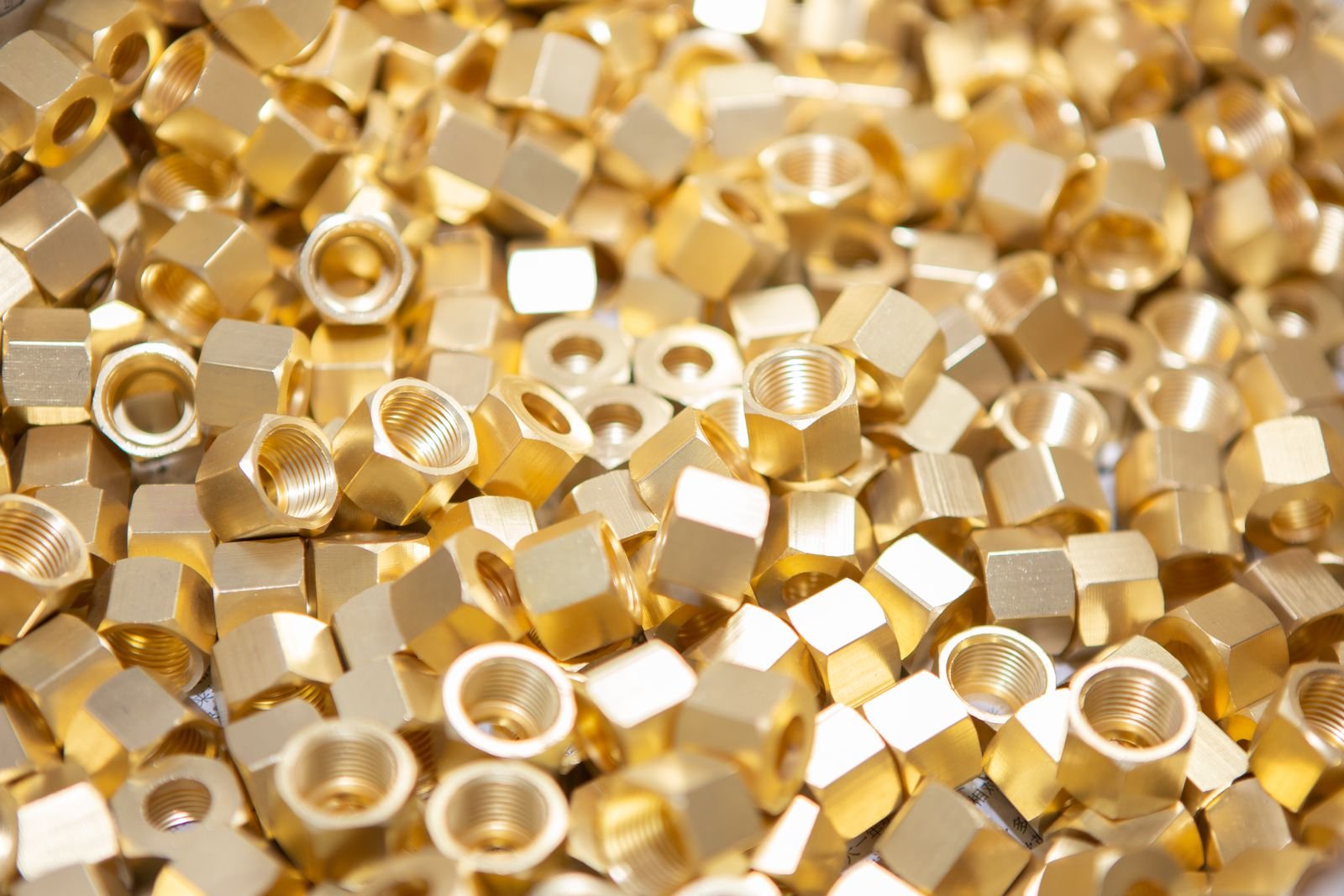
Flanged nuts are turned parts, and the material choice follows the same logic as any turned part: the environment, the load, and the mating material. Brass is a common choice for a flanged nut because it machines cleanly, holds a thread well, and resists corrosion in ordinary use. But the material must also suit the joint: a nut that bears on a soft material needs a flange that will not dig in, a nut in a corrosive environment needs a material that will not corrode and seize, and a nut that mates with a different metal needs the pairing considered, because dissimilar metals in contact can cause problems in service. State the mating material and the environment in the RFQ, and say whether the nut will be tightened once or removed repeatedly for service. That description lets the engineer judge whether the material and the flange together suit the joint.
Serrations and locking features: when the flange does more
Some flanged nuts carry serrations on the underside of the flange, which bite into the clamped surface and resist loosening under vibration. That is a useful feature where the joint vibrates, but it is also a feature that must be specified deliberately: the serrations damage the clamped surface, so they are wrong where the surface must stay clean or be reused. Other flanged nuts rely on the flange alone, with no serrations, and depend on the tightening load to hold. A buyer should state whether the joint vibrates, whether the nut must resist loosening, and whether the clamped surface can be marked. If vibration is not mentioned, the supplier cannot know whether a serrated flange is needed or whether it would damage the surface. Name the condition, and the flange feature follows from it.
Ordering workflow: from joint description to a quotable RFQ
A workable flanged-nut workflow starts with the joint, not the nut. First, describe what the nut clamps, what the surface is made of, and what would happen to it under a plain nut. Second, state the flange diameter and thickness, and what they are for. Third, state the thread, the hex across-flats, and the overall height, so the nut fits the bolt, the tool, and the space. Fourth, state the material, the mating material, and the environment, and whether the nut is tightened once or removed for service. Fifth, state whether the joint vibrates and whether the flange needs serrations or must stay smooth. Then send the drawing with those notes, and ask for a quote. A buyer who sends only a thread size and the words “flanged nut” will get a nut; a buyer who sends the joint description will get a nut that holds.
Common pitfalls and how to avoid them
The most common pitfall is specifying a flanged nut without stating what the flange bears on, so the flange is the wrong size for the surface. The second is a flange that is too thin for the tightening load, which dishes and concentrates the load at the edge. The third is a bearing surface that is not square to the thread, so the nut bears on one edge. The fourth is a hex that does not fit the tool or the space, because the hex was left to assumption. The fifth is a serrated flange used where the clamped surface must stay clean, so the serrations damage a surface that cannot be damaged. The sixth is a material chosen for the nut alone, without considering the mating material and the environment. Each of these is a specification failure, not a manufacturing failure, and each is fixed in the RFQ before the quote.
Buyer checklist
- The reason for the flange is stated: what surface it bears on and what a plain nut would do to that surface.
- Flange diameter and thickness are stated, with the clamped surface and tightening load in mind.
- The bearing surface is described — what it bears on and whether uneven bearing matters for the joint.
- Thread size and pitch, hex across-flats, and overall height are all stated.
- Material, mating material, and environment are stated in the RFQ.
- Whether the nut is tightened once or removed repeatedly for service is stated.
- Vibration and loosening are addressed: serrated flange needed, or smooth flange required.
- The drawing shows the flange, thread, and hex together, so the part is quoted as a whole.