A turned part is easy to draw and hard to make cheaply, and the difference is usually decided before the drawing reaches the supplier. A design that is simple on paper can be expensive in the machine if it asks for a feature the turning process does not do well, and a small change made early — a larger radius, a shorter thin wall, a standard thread — can remove that cost without changing what the part does. Design for manufacturability, or DFM, is not a separate engineering discipline. It is the habit of checking, before quoting, whether each feature on the drawing earns its place, and whether it could be made simpler without changing the function.
What DFM means for a turned part
Turning makes round parts by rotating the workpiece against a cutting tool, so the features that suit turning are the ones that are round, concentric, and reachable from the end or the outside of the part. A bore, a thread, a shoulder, a groove and a chamfer are all natural turning features. A feature that breaks that logic — a deep internal undercut, a very thin wall, a square internal corner, a long slender section — is not impossible, but it is slower, harder to hold, and harder to inspect, and the quote will show it. DFM for turning starts with that test: for each feature, ask whether it is a turning feature, and if it is not, ask whether the function really needs it in that form. The answer is often that a slightly different shape does the same job and machines far more easily.

Features that machine easily, and features that drive cost
The cheapest turned part is one where the tool can reach every surface without a special setup, where the part is stiff enough not to flex while it is cut, and where the dimensions that matter are few and clearly marked. Generous internal radii are easier than sharp internal corners, because a turning tool has a nose radius and cannot cut a perfectly sharp inside corner. Short, stiff sections are easier than long, thin ones, because a slender part flexes under cutting force and vibrates, which hurts both surface finish and consistency. A standard thread is easier than a special one, because the tooling exists and the inspection is routine. A single setup is easier than several, because every time the part is removed and re-clamped, time is spent and alignment can shift. None of this is new information to a machinist, but a buyer who thinks about it before sending the drawing will get a better quote than a buyer who discovers it in the supplier’s questions.
Simplifying a drawing without changing the function
Simplifying a drawing does not mean weakening the part. It means removing what does not serve the function. A common simplification is to relax a tolerance on a dimension that does not decide whether the part works, and to keep the tight tolerance only where the function demands it. Another is to replace a special feature with a standard one: a standard thread instead of a special pitch, a standard chamfer instead of a custom edge break, a plain bore instead of a stepped bore where the step serves no purpose. A third is to reduce the number of surfaces that need a fine finish, and to call out the finish only on the faces that seal, slide, press-fit, or are visible. Each of these changes leaves the part doing the same job, and each one removes time, tooling, or inspection from the quote. The discipline is to make the change on the drawing and to note it, so the supplier quotes the simplified part rather than guessing whether the simplification is allowed.
Thin walls, long parts, and deep bores: the three hard cases
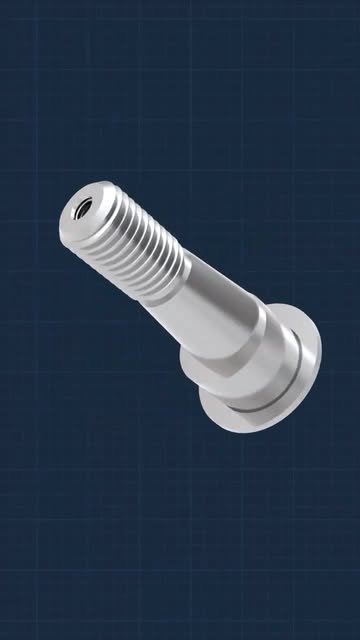
Three geometries cause most of the difficulty in turning, and a buyer who recognises them early can usually redesign around them. A thin wall flexes under the tool, so the wall thickness, the length of the thin section, and the way the part is held all matter, and a slightly thicker wall or a shorter thin section can make the part far more stable. A long, slender part is the same problem in a different shape: the further the tool works from the support, the more the part deflects, and a design that shortens the slender section or adds a supporting diameter will machine more consistently. A deep bore is a reach problem: the tool must extend into the part, and a long, thin boring bar flexes and chatters, so a bore that is deep relative to its diameter is slower and harder to hold to size. In each case the question is the same — is the difficult geometry doing a job that a simpler geometry could do? If the answer is no, the redesign is worth more than any negotiation on price.
Threads, grooves, and undercuts: where small choices matter
Threads and grooves are small features with an outsized effect on cost, because they need specific tooling and careful inspection. A thread that matches a standard size and pitch uses standard tooling; a special thread needs a special tool and a special gauge. A groove that is wide enough for a standard grooving tool is cheap; a narrow, deep groove needs a fragile tool and slow cutting. An undercut that is needed for a thread runout or a seal is a legitimate feature; an undercut that is there because the drawing copied an earlier part may serve no purpose at all. The DFM check here is to look at every thread, groove, and undercut and ask two questions: what standard tool makes this, and what happens if it is made slightly larger or simpler? If the function survives the simpler version, the simpler version is the right drawing to send.
How to use the supplier’s engineering review
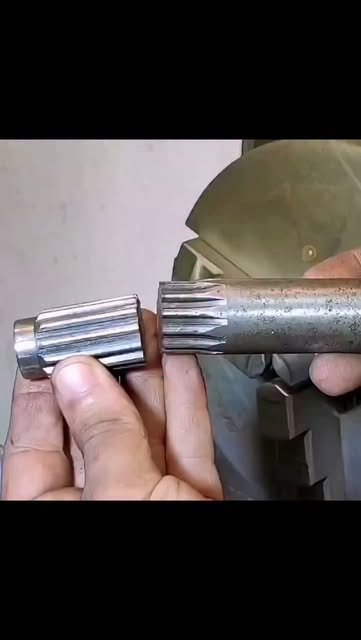
Precimora reviews a drawing for manufacturability before quoting, and that review is one of the most useful steps in the whole process — but only if the buyer treats it as a design conversation rather than a hurdle. The review will flag the features that are hard to make, the tolerances that are tighter than the function needs, and the places where a small change would help. A buyer who sends a drawing and asks, openly, what could be simplified without changing the function will usually get a short list of practical changes and a better quote. A buyer who sends a drawing as a fixed instruction, and resists every suggestion, will get a quote for the hard version of the part. The review is free in the sense that it happens before the quote; the changes it suggests are cheapest at that point too. Use it early, and use it before the drawing is frozen.
Ordering workflow: from first sketch to a quotable drawing
A workable DFM workflow has the same shape every time. First, sketch the part around its function: what it connects to, what it must survive, and which surfaces actually do something. Second, draw the part with turning in mind: round features, generous radii, short stiff sections, standard threads. Third, mark only the functional dimensions as critical, and leave the rest to the general tolerance note. Fourth, send the drawing for an engineering review and ask what could be simplified, and make the changes that do not alter the function. Fifth, confirm the material, the quantities, and the inspection requirements, and send the final drawing for a quote. Writing these steps down, and doing the review before the quote rather than after it, is what turns DFM from a slogan into a lower quote and a part that arrives right the first time.
Common pitfalls and how to avoid them
The most common pitfall is copying a feature from an earlier part without asking whether it is needed here, so a difficult geometry is carried forward for no reason. The second is specifying a sharp internal corner where a radius would do, which forces a slow, careful cut or a secondary operation. The third is tightening every tolerance to be safe, which makes every dimension expensive instead of only the functional ones. The fourth is choosing a special thread or a special groove where a standard one would work, which adds tooling and inspection for no functional gain. The fifth is freezing the drawing before the engineering review, so the supplier’s suggestions arrive too late to use. The sixth is designing a long, thin, or deep feature and then being surprised by the quote, when the geometry itself was the cost driver. Each of these is avoidable, and each is cheapest to avoid on the drawing, before the quote.
Buyer checklist
- Every feature on the drawing has been checked against the function it serves, and features with no function have been removed.
- Internal corners carry a generous radius rather than a sharp corner, unless the function demands otherwise.
- Thin walls and long slender sections have been shortened or thickened where the function allows.
- Deep bores have been checked for depth against diameter, and shortened where possible.
- Threads, grooves, and undercuts are standard sizes where the function allows, not special ones by habit.
- Only functional dimensions carry tight tolerances; the rest rely on the general tolerance note.
- Surface finish is called out only on faces that seal, slide, press-fit, or are visible.
- The drawing has been through an engineering review for manufacturability before the quote, and the suggested simplifications have been considered.