A brass fitting can look perfect on the outside and be rotten on the inside. Dezincification removes zinc from brass and leaves a weak, porous copper structure that looks like brass, measures like brass — and fails like a sponge. It happens in water service, it happens slowly, and nothing on the outside shows it until the part leaks, cracks or breaks. If your brass part will touch water, this is the failure to specify against: this post explains which brasses are at risk, why the water matters more than the brass, and what to state in the RFQ.
What dezincification is
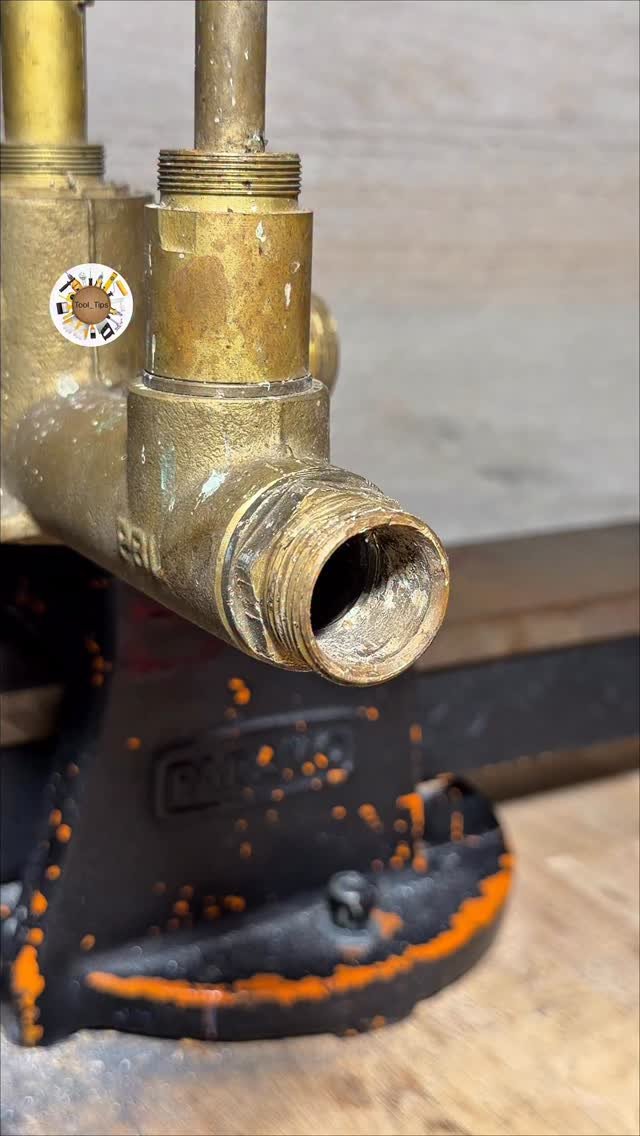
Brass is copper and zinc. In dezincification, the zinc is selectively dissolved out of the alloy by the water, and the copper is left behind in a porous, weak network. The part keeps its shape and much of its appearance, but its strength collapses. A fitting that was pressure-tight becomes a leak. A thread that held torque strips under a fraction of its original load. A valve body that looked solid crumbles when it is removed.
The process needs water and time. It is faster in aggressive water: water with high chloride content, low pH, high temperature, or water that sits stagnant in a fitting for long periods. It is slower in benign water, but it does not stop — it is a slow, progressive attack, and a fitting that has been in service for years can be far weaker than it looks. That is what makes dezincification dangerous: it is invisible until it is advanced, and by then the part is already compromised.
Which brasses are at risk
Not all brasses dezincify equally. The risk rises with zinc content and with the presence of lead, and it falls sharply in alloys designed to resist it. Free-cutting brass CW614N — the standard brass for turned parts, and the grade Precimora lists for its bushings — is a high-zinc brass and is susceptible to dezincification in aggressive water. That does not make it a bad material. It makes it the wrong material for a water-service part that will see aggressive water for years, unless the water is known to be benign.
Dezincification-resistant brass, often called DZR brass, is alloyed and treated to resist the attack. CW602N is the common example: a brass with a small addition of arsenic that inhibits dezincification. DZR grades are the standard choice for plumbing fittings, valves, and water-service components in many markets, and some plumbing regulations effectively require them for drinking-water contact. Whether DZR is needed for your part depends on the water it will see and the regulations it must meet — and that is a question for the engineering review, not a guess. Precimora does not publish a stocked DZR grade, so a buyer who needs one should raise it in the RFQ and confirm availability before assuming it.
Bronze is the other answer. Because bronze is alloyed with tin rather than zinc, it does not dezincify. A bronze bushing or fitting in water service avoids the failure mode entirely, at the cost of harder machining and a higher price. For a critical water-service part, bronze is often the safer choice — see the companion post on brass versus bronze for the full comparison.
The water matters more than the brass
Two identical brass fittings can have very different lives depending on the water they see. Soft, slightly alkaline water with low chloride is gentle on brass. Hard water with high chloride, acidic water, hot water, and water that sits stagnant in a dead leg are all aggressive. A fitting in a system that is flushed regularly lasts longer than the same fitting in a system where water sits still for months.
The practical consequence is that the RFQ must describe the water. “Water service” is not enough. State whether the water is drinking water, heating-system water, seawater, or process water; whether it is hot or cold; whether it circulates or sits; and whether the chloride content or pH is known. If the water chemistry is unknown, say so — the supplier can then recommend the conservative choice, which is usually a DZR grade or bronze, rather than gambling on benign water.
Regulations: the rule that may already decide for you
In many markets, the material choice for drinking-water contact is not free. Drinking-water regulations limit lead content and, in effect, push designers toward lead-free and dezincification-resistant brasses for wetted parts. The details vary by market — the United States, the European Union, and individual countries each have their own rules, and they change — so this post does not state a single regulation as the answer. The point is that the buyer must know which market the part will be sold into, and must state it in the RFQ. A part that is compliant in one market may not be compliant in another, and the supplier cannot make that judgement without knowing the destination market. The companion post on lead-free brass and compliance covers the regulatory landscape in detail.
Testing: how resistance is proven
Dezincification resistance is not a claim. It is a test result. The standard test is ISO 6509, which exposes a brass sample to a corrosive solution and measures how deep the dezincification penetrates. A DZR brass should show only a shallow penetration depth; a susceptible brass shows deep attack. If dezincification resistance matters for your part, ask the supplier whether the material grade has ISO 6509 test data, and whether a material certificate can be provided. A certificate that states the grade is not the same as evidence that the grade resists dezincification — ask for the test result, or at least for the grade’s published resistance data.
How to specify against dezincification in your RFQ
A good RFQ for a water-service brass part states four things. First, the water: type, temperature, circulation, and chemistry if known. Second, the destination market and any drinking-water regulation that applies. Third, the required resistance: whether a DZR grade is required, or whether bronze is acceptable as an alternative. Fourth, the evidence: whether an ISO 6509 test result or a material certificate is required with the delivery.
If the water is benign and the service life is short, free-cutting brass CW614N may be entirely adequate, and the supplier can confirm that in the review. If the water is aggressive, the service life is long, or the part is safety-relevant, the conservative choice is DZR brass or bronze. The expensive mistake is to specify free-cutting brass for an aggressive-water part and discover the failure years later, when the part is installed and the water has done its work.
Buyer questions, answered
Which brasses are at risk of dezincification?
Risk rises with zinc content and lead. Free-cutting brass CW614N — the standard brass for turned parts — is a high-zinc brass and is susceptible in aggressive water. Dezincification-resistant (DZR) brass such as CW602N, alloyed with a small addition of arsenic, resists the attack and is the standard choice for plumbing fittings and water-service components. Bronze avoids the failure entirely because it is alloyed with tin, not zinc.
My part only touches water occasionally — is it still at risk?
It depends on the water, not just the contact. Soft, slightly alkaline water with low chloride is gentle; hard water with high chloride, acidic water, hot water, and water that sits stagnant in a dead leg are all aggressive. A fitting in a system flushed regularly lasts longer than the same fitting where water sits still for months — so state whether the water circulates or sits.
How is dezincification resistance actually proven?
By a test result, not a claim. The standard test is ISO 6509, which exposes a brass sample to a corrosive solution and measures how deep the dezincification penetrates. Ask the supplier whether the grade has ISO 6509 test data, and whether a material certificate can be provided — a certificate that states the grade is not the same as evidence that the grade resists dezincification.
Could the regulations already decide the material for me?
Yes. In many markets, drinking-water rules limit lead content and in effect push designers toward lead-free and dezincification-resistant brasses for wetted parts. State the destination market in the RFQ — a part compliant in one market may not be compliant in another, and the supplier cannot judge that without knowing the market. The companion post on lead-free brass and compliance covers the regulatory landscape in detail.
Common pitfalls and how to avoid them
The most common pitfall is not mentioning water at all. A bushing for “fluid hardware” that will actually see aggressive water needs a different material conversation from one that will see oil. State the fluid in the RFQ.
The second is assuming all brass is the same. CW614N and CW602N are both brass, and they behave very differently in water. Name the grade, or ask for a recommendation.
The third is trusting appearance. A dezincified part looks like brass until it fails. Do not accept a visual check as proof of soundness for a water-service part — ask for the grade and the test evidence.
The fourth is forgetting stagnant water. A fitting in a dead leg, where water sits for months, dezincifies faster than one in a circulating line. State whether the water circulates or sits.
The fifth is assuming the regulation does not apply. If the part will touch drinking water, the destination market’s rules may already decide the material. State the market in the RFQ.
The water-service decision tree
Four questions, in order, before the alloy is chosen:
- “What fluid?” Drinking water, heating water, seawater, process water, or oil — “fluid” is not enough. A bushing for fluid hardware that will actually see aggressive water needs a different material conversation from one that will see oil.
- “What water?” Type, temperature, circulation, and chemistry (chloride, pH) if known. Aggressive water — or water whose chemistry is unknown — points to the conservative choice.
- “What market and regulation?” The destination market’s drinking-water rules may already require DZR or lead-free brass.
- “What evidence?” ISO 6509 test data or a material certificate, where resistance matters.
Outcome: benign water and a short service life → free-cutting brass CW614N may be entirely adequate, confirmed in the engineering review. Aggressive water, a long service life, or a safety-relevant part → DZR brass (for example CW602N) or bronze. The expensive mistake is to specify free-cutting brass for an aggressive-water part and discover the failure years later, when the part is installed and the water has done its work.
Buyer checklist
- The fluid is named: drinking water, heating water, seawater, process water, or oil — not just “fluid”.
- The water temperature, circulation, and chemistry (chloride, pH) are stated where known.
- The destination market and any drinking-water regulation are stated.
- The required resistance is stated: DZR grade, bronze, or free-cutting brass confirmed as adequate.
- The material grade is named, or a recommendation is requested with the water described.
- Evidence is requested: ISO 6509 test data or a material certificate, where resistance matters.
- The service life is stated, so the supplier can judge whether the alloy choice matches it.
- The material choice is confirmed in the engineering review before production, not assumed from the grade name.
If your brass part will touch water, describe the water, the market, and the service life in the RFQ at https://precimora.com/request-a-quote/ — the quote is promised in 24–48h.