If your drawing says just “knurl”, your supplier has to guess the pattern, the pitch, the length and the purpose — and each guess changes the part. This guide solves that problem: it shows how to specify a knurl in one line so the pattern forms cleanly, the grip works the way your hand or your joint needs it to, and the quote comes back without a round of questions. Knurling looks simple — a textured band around a cylinder — but it is a forming operation, not a cutting one, and that single fact decides how it must be specified.
What knurling actually does to the metal
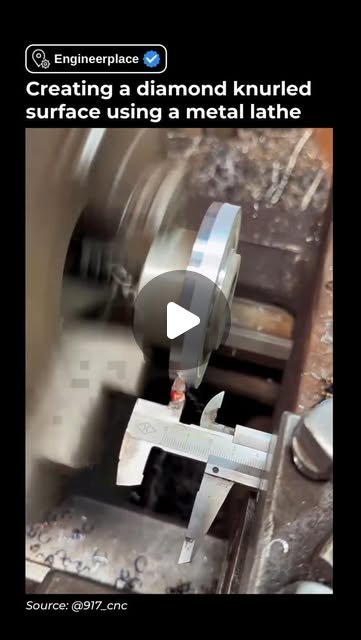
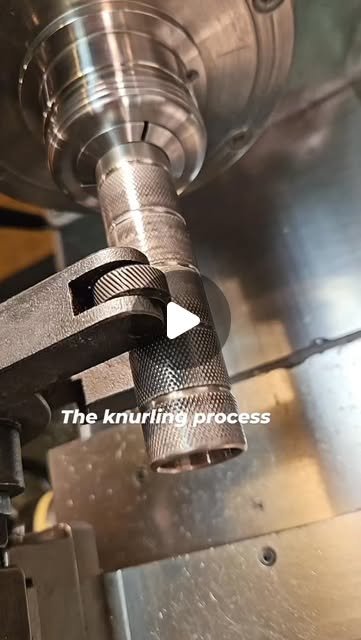
Knurling is a forming operation, not a cutting operation. A knurling tool carries one or two hardened wheels with a pattern of teeth, and it presses those wheels into the rotating workpiece. The metal is displaced, not removed: it flows up between the teeth and forms the raised pattern. That distinction matters for three reasons. First, knurling does not produce chips, so it is fast and clean. Second, it raises the outside diameter of the part — the displaced metal has to go somewhere, and it goes outward, so a knurled section measures larger than the diameter it started from. Third, the pattern is only as good as the match between the tool and the diameter: the circumference of the workpiece must divide evenly into the pattern, or the diamonds will not close properly and the pattern will show a visible seam where the ends meet.
A buyer who understands that knurling is forming will specify it differently from a buyer who thinks of it as cutting. The diameter before knurling, the pattern, and the finished diameter after knurling are three different numbers, and the drawing should make clear which one is the controlled dimension. If the drawing gives only the finished diameter, the supplier must work backwards to the pre-knurl diameter. If it gives only the pre-knurl diameter, the buyer must accept that the finished size will be larger. State both, or state which one governs, and the forming process has a target to hit.
Straight knurl vs diamond knurl: what each one is for
The two common patterns do different jobs, and choosing between them is the first specification decision. A straight knurl is a set of parallel ridges running along the axis of the part. It gives grip in one direction — it resists rotation around the axis, which is what a thumbwheel or an adjustment knob needs. A diamond knurl is a crosshatch of diagonal ridges that form small diamonds across the surface. It gives grip in both directions — rotation and sliding along the axis — which is what a handle, a handwheel, or a knob that is pulled as well as turned needs.
The choice should follow the hand, not the appearance. A knob that is turned with the fingers and never pulled needs a straight knurl; a diamond knurl on it is decoration that costs nothing extra but also adds nothing. A handle that is gripped and pulled needs a diamond knurl; a straight knurl on it will slip along the axis when the hand pulls. A press-fit knurl, where the knurled section is pressed into a bore to hold the part, is a different case again: the pattern is there to bite into the mating material, and the choice of pattern follows the material being gripped and the load the joint must carry, not the hand at all. State the purpose in the RFQ — grip for turning, grip for pulling, or a press-fit hold — and the pattern follows from it.
Pitch: the size of the pattern, and why it matters
Knurl pitch is the spacing of the pattern, and it is the dimension that decides whether the knurl feels right. A coarse pitch — large diamonds, widely spaced — gives a strong grip and a rough feel, and it suits a handle that is gripped with a gloved hand or a knob that must be turned with wet or oily fingers. A fine pitch — small diamonds, closely spaced — gives a lighter grip and a smoother feel, and it suits a small adjustment knob that is turned with bare fingertips, where a coarse knurl would feel harsh and make fine adjustment difficult.
Pitch also decides whether the pattern forms cleanly. A knurling tool has a fixed pitch, and the workpiece diameter must suit it: if the circumference does not divide evenly by the pitch, the pattern will not close and the knurl will show a double-tracked or incomplete section. This is the “hit or miss” character of knurling that machinists talk about — a perfect diamond pattern emerges only when the diameter and the tool geometry agree. A buyer does not need to calculate this, but should know that the supplier may need to adjust the pre-knurl diameter slightly to make the pattern close. If the drawing fixes the pre-knurl diameter to a tight tolerance, that adjustment may not be possible, and the pattern may not form cleanly. State the pitch, state the knurled length, and let the supplier confirm the diameter that makes the pattern work.
The diameter question: what grows, and by how much
Because knurling displaces metal outward, the outside diameter grows. How much it grows depends on the pitch and the depth of the pattern, and it is not a fixed number the buyer can look up — it is a result of the tool and the material. For a buyer, the practical point is that the finished knurled diameter is not the same as the diameter before knurling, and the drawing must say which one is controlled.
The usual approach is to control the diameter before knurling and to treat the finished knurled diameter as a result, with a note that the knurl is measured over the pattern. If the knurled section must fit into a bore or a housing — a press-fit knurl, for example — the finished diameter is the functional one, and it should be stated as a range the supplier must hit, with the pre-knurl diameter left to the supplier’s judgement. If the knurl is only for grip and nothing fits over it, the pre-knurl diameter is the one to control and the finished size is a consequence. Either way, say which one governs. A drawing that gives one diameter and calls it “knurled” without saying whether it is before or after will be quoted with an assumption, and the assumption may not match the assembly.
Knurling for a press fit: a different specification
A knurl used for a press fit — a knurled pin pressed into a bore, a knurled insert held in a housing — is specified differently from a knurl used for grip. Here the pattern is a retention feature: the raised diamonds bite into the mating material and hold the part against pull-out and rotation. The specification needs the mating material, the bore size, and the load the joint must carry, because those decide the pitch and the finished diameter. A knurl pressed into soft plastic needs a different pattern from one pressed into brass or steel, and a joint that must resist torque needs a different pattern from one that must resist pull-out.
State the mating material and the bore in the RFQ, and say what the joint must survive — pull-out, torque, vibration, or all three. The supplier can then confirm the pattern and the finished diameter that will hold. A press-fit knurl specified without the mating material is a guess, and a guess that is wrong will either fall out or split the housing.

How to state a knurl in your RFQ
A complete knurl specification has five parts: the pattern (straight or diamond), the pitch (coarse or fine, with a value if the standard is known), the length of the knurled section, the diameter that governs (before or after knurling), and the purpose (grip for turning, grip for pulling, or press-fit hold). “Diamond knurl, coarse pitch, 15 mm long, pre-knurl diameter as drawn, for hand grip” is a specification. “Knurl” is not.
Also state where the knurl starts and ends. A knurl that runs into a shoulder or a thread will be incomplete at the edge, and the tool needs room to enter and exit. Mark the knurled length on the drawing with its start and end, and keep it clear of threads, grooves, and shoulders by a small margin. If the knurl must run right up to a feature, say so, and the supplier can confirm whether the tool can reach it.
Buyer FAQ: knurling
Will knurling change my part’s diameter? — Yes. Knurling displaces metal outward, so a knurled section measures larger than the diameter it started from. The diameter before knurling, the pattern, and the finished diameter after knurling are three different numbers — state both diameters on the drawing, or state which one governs.
Straight knurl or diamond knurl for my knob? — Follow the hand, not the appearance. A knob that is only turned needs a straight knurl, which resists rotation. A handle that is gripped and pulled needs a diamond knurl, which grips in both directions — rotation and sliding along the axis. A straight knurl on a handle that is pulled will slip.
Can a knurl hold a press fit? — Yes, but it is a different specification from a grip knurl. State the mating material, the bore size, and the load the joint must carry — pull-out, torque, vibration, or all three — because those decide the pitch and the finished diameter. A press-fit knurl specified without the mating material is a guess.
What if the diamond pattern does not close cleanly? — The pattern only closes when the circumference of the workpiece divides evenly into the pattern. Do not fix the pre-knurl diameter to a tight tolerance and expect the pattern to follow — let the supplier confirm the pre-knurl diameter that makes the pattern close.
Common pitfalls and how to avoid them
The most common pitfall is writing “knurl” with no pattern, pitch, or purpose, so the supplier must guess all three. State the pattern, the pitch, and the purpose.
The second is controlling the wrong diameter — specifying the finished knurled diameter as if it were a turned diameter, when it is a formed result. State whether the governed diameter is before or after knurling.
The third is a knurl that runs into a thread or a shoulder, where the tool cannot form a complete pattern. Mark the knurled length with clear start and end points.
The fourth is choosing the pattern by appearance rather than by function. A straight knurl on a handle that is pulled will slip; a diamond knurl on a knob that is only turned adds nothing. Choose the pattern by what the hand or the joint does.
The fifth is forgetting that knurling is forming, not cutting, and that the pattern depends on the diameter matching the tool. If the drawing fixes the pre-knurl diameter tightly, the pattern may not close. Let the supplier confirm the diameter that makes the pattern work.
The 30-second knurl decision
Before writing the specification, answer three questions — the answers write the specification for you. First, what does the hand or the joint do: turn only, pull as well as turn, or hold a press fit? That decides straight knurl, diamond knurl, or a press-fit pattern chosen by mating material and load. Second, which diameter governs: the diameter before knurling, or the finished diameter over the pattern? If the knurled section must fit into a bore, the finished diameter is the functional one; if nothing fits over it, control the pre-knurl diameter. Third, is the pre-knurl diameter free for the supplier to adjust so the pattern closes cleanly? If the drawing fixes it tightly, the pattern may not form. A specification that answers all three — pattern, governing diameter, and freedom to adjust — is a specification the supplier can make without asking a question.
Buyer checklist
- The pattern is stated: straight knurl or diamond knurl, chosen by function.
- The pitch is stated: coarse or fine, with a value where the standard is known.
- The length of the knurled section is stated, with clear start and end points.
- The governing diameter is stated: before knurling, or finished over the pattern.
- The purpose is stated: grip for turning, grip for pulling, or press-fit hold.
- For a press-fit knurl, the mating material, the bore, and the load the joint must carry are stated.
- The knurled section is kept clear of threads, grooves, and shoulders.
- The supplier has confirmed the pre-knurl diameter that makes the pattern close cleanly.